
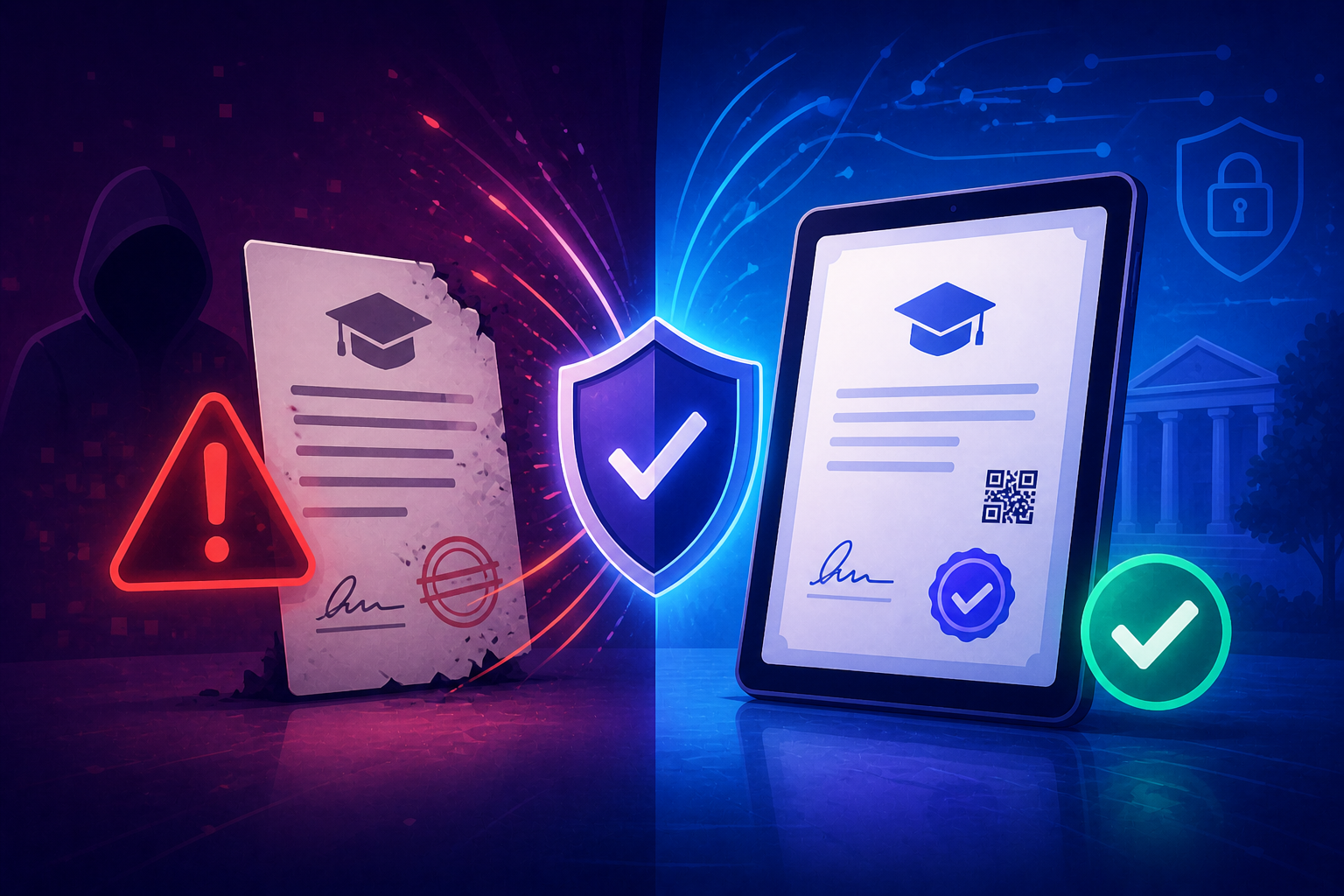
Fraud in academic and training certificates is a growing problem that affects universities, educational centres, companies and online platforms. From counterfeit diplomas to manipulated certificates, these practices can damage the reputation of institutions and generate risks in selection and validation processes.
Hoy en día, obtener un certificado falso puede ser sorprendentemente fácil, lo que aumenta la necesidad de sistemas que permitan verificar la autenticidad de forma rápida y fiable.
What types of fraud exist in certificates
Certification fraud can take different forms, some more obvious than others:
- Counterfeit Certificates: documents created without real training.
- Manipulated certificates: Modification of notes, dates or data of the owner.
- Improper use of certificates: Share credentials from other people.
- Mills Diploma: institutions that issue titles without real training.
Este tipo de fraude afecta tanto a la credibilidad de las instituciones como a las empresas que confían en esos certificados para tomar decisiones.
Why certificate fraud is a real problem
The impact of fraud goes beyond the document itself. It has direct consequences in the labor market, education and institutional reputation.
- Hiring of unqualified profiles.
- Loss of confidence in titles and certifications.
- Reputational damage to universities and schools.
- Legal problems in regulated sectors.
- Increase in costs in manual verification processes.
In many cases, companies do not detect fraud until they have already made decisions based on incorrect information.
Why traditional certificates are not enough
The traditional model based on PDFs or downloadable documents presents several weaknesses:
- They can be easily edited.
- There is no direct verification.
- They depend on manual processes.
- They do not allow to control if they are still valid.
Even a certificate with a professional design can be false if there is no system that allows you to check its authenticity.
How to Avoid Digital Certificate Fraud
The best way to avoid fraud is not to improve the design of the certificate, but to change the model of issuance and verification.
Some key practices include:
- Issue from secure platforms: evitar herramientas manuales como Word o PDFs editables.
- Assign unique identifiers: cada certificado debe tener un código o referencia única verificable.
- Include online verification: permitir comprobar la autenticidad mediante enlace o QR.
- Control status: be able to revoke or expire certificates when necessary.
- Use trusted technologies: Digital signatures, time stamps or immutable records.
The role of verifiable credentials
Verifiable credentials are one of the most effective solutions to reduce fraud. They allow you to directly check if a certificate is authentic, who has issued it and if it is still valid.
This model eliminates the dependency of manipulable documents and reduces the need for manual verifications.
- Immediate verification by third parties.
- Greater protection against counterfeiting.
- Control over the validity of each credential.
- Greater confidence in selection and accreditation processes.
How to detect a fake certificate
If you work in selection, training or validation of certificates, there are signs that can indicate a possible fraud:
- Lack of link or verification system.
- Editable or inconsistent format.
- Incomplete or unclear data.
- Issuing institution difficult to validate.
- Absence of unique identifier.
When in doubt, it is always advisable to validate the credential with the issuing institution or through a verifiable system.
What a modern anti-fraud system should look like
A modern certification system must be designed from the start to prevent tampering and facilitate verification.
- Controlled and centralized issuance.
- Public or restricted verification depending on the case.
- State management (active, revoked, expired).
- Link or QR access.
- Traceable record of each credential.
This approach allows the institution to maintain control even after issuing the certificate.
How Credify helps
Credify allows you to issue verifiable digital credentials that reduce the risk of fraud and facilitate validation by third parties.
The platform is designed so that universities, companies and educational centres can issue safe, verifiable and prepared certificates to be shared in digital environments.
This helps to protect the institution’s reputation and to offer greater confidence to students, businesses and organisations.
Frequently asked questions
Is it easy to falsify a PDF certificate?
Yes. Static documents can be edited or replicated, so they are not sufficient to guarantee authenticity.
How can you check if a certificate is real?
The most reliable way is through an online verification system that allows validating the issuer, the owner and the status of the credential.
Do digital credentials eliminate fraud?
They do not completely eliminate it, but they significantly reduce the risk by allowing direct verification and control of the state.
Which sectors need this type of solution most?
Education, corporate training, HR, professional certifications and any environment where certificates have real value.
Next step
If your organisation wants to avoid fake certificates and improve trust in its accreditations, the next step is to implement a verifiable credential system.
Universities · Businesses · Educational centres · Online Courses